

By the time a prospective client picks up the phone to call your firm, they have already decided whether you are worth their time. Not based on what you told them. Based on what they found on their own.
Research consistently shows that B2B buyers complete approximately two-thirds of the buying journey before ever reaching out to a vendor. In consulting — where the stakes are high and the selection is personal — prospects conduct deep evaluations across your website, published content, proposals, and LinkedIn presence long before any conversation begins.
The problem is that most consulting firms invest heavily in service delivery, client relationships, and thought leadership, while significantly underinvesting in how those capabilities are communicated visually and structurally. The result is a credibility gap that costs opportunities that never become visible.
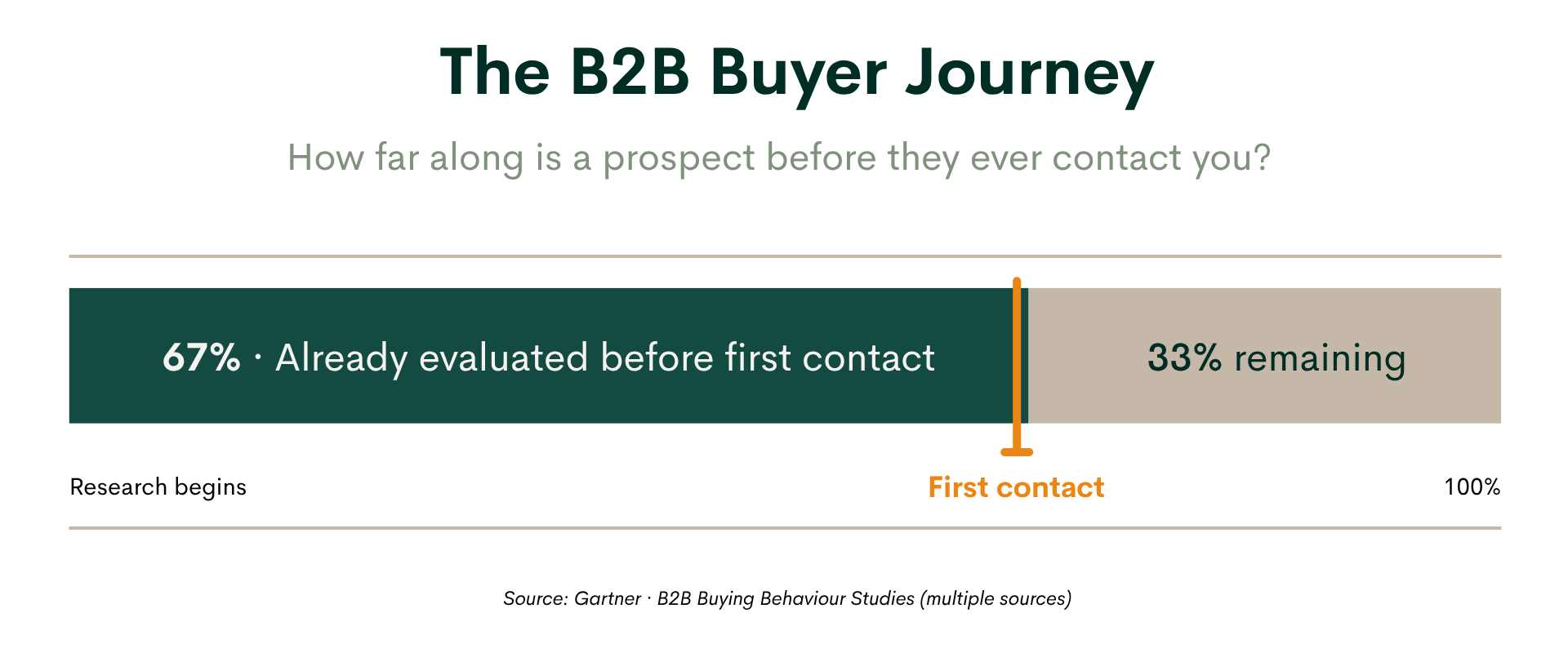
Prospects do not announce that they are assessing you. They visit your website at 10pm. They open a proposal on a phone between meetings. They scan your team page looking for signals of seniority and experience. And they form their judgement quickly.
A separate British study found that 94% of first impressions are design-related — not content-related. Users are not reading carefully on that first visit. They are making a rapid assessment of whether this organisation looks like what it claims to be.
For consulting firms — where the service is intangible and expertise is the product — visual signals carry an outsized weight. When those signals are inconsistent, outdated, or generic, they undermine the very expertise the firm is trying to convey.
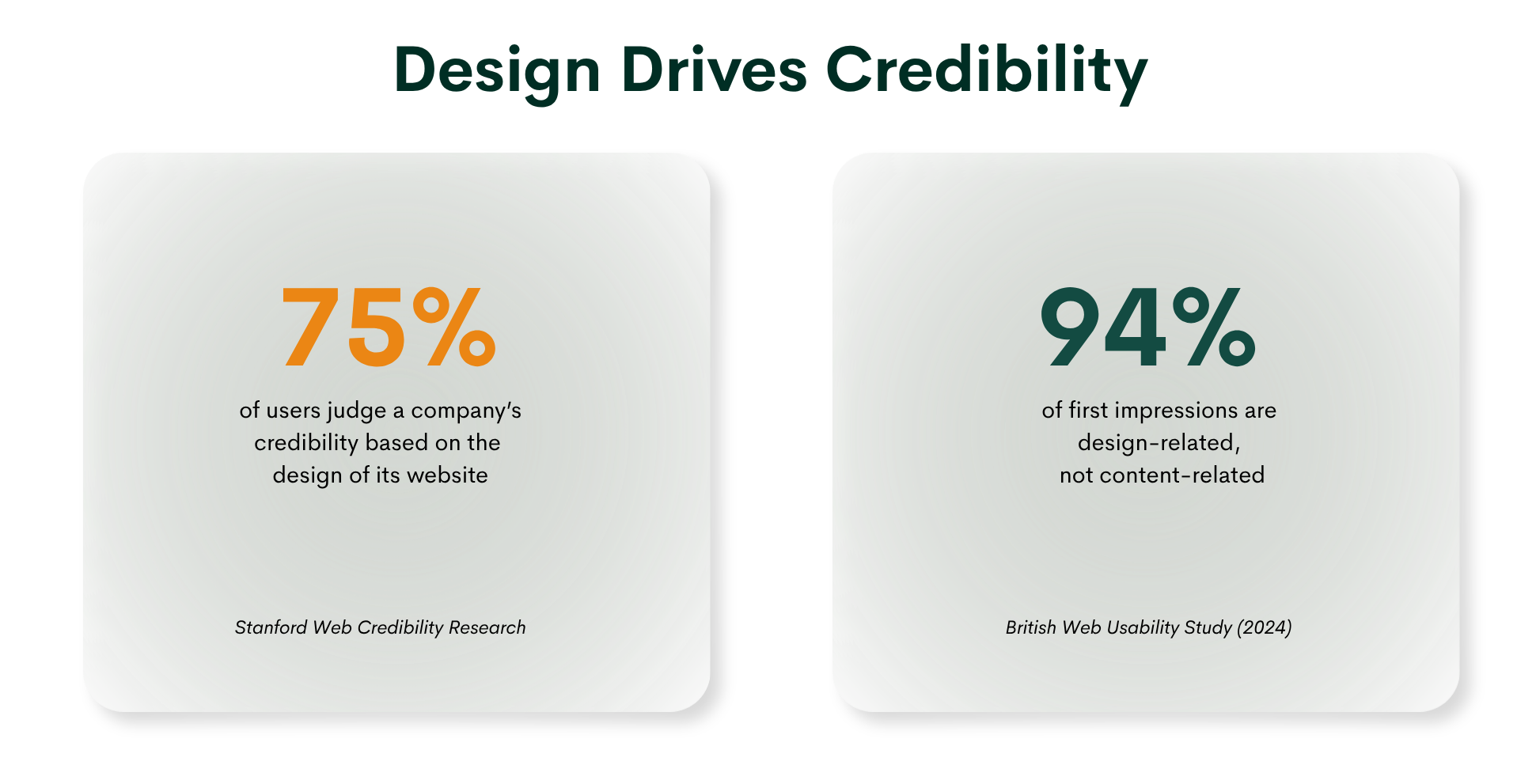
The evaluation is rarely conscious or rational. Prospects are not scoring your colour palette or critiquing your typography. But they are registering — subconsciously and quickly — whether your materials feel coherent, whether your website is easy to navigate, whether your proposals look like they came from the same organisation as your brochure.
The specific touchpoints that matter most in consulting:
When these feel disjointed — different fonts, different tones, different levels of visual quality — the message received is fragmentation. And fragmentation, in a business built on structured thinking and clear communication, is a serious credibility problem.
A few patterns consistently undermine trust in consulting firms’ brands.
Generic visual identity. A logo that could belong to any firm in any sector communicates nothing about positioning, expertise, or character. It disappears into a landscape of identical blue-and-grey corporate identities.
Inconsistent proposals. Many firms maintain a strong website but produce proposals in different templates depending on who prepared them. When a prospect receives a proposal that looks visually different from the website they researched, the mismatch creates doubt.
Weak case study presentation. Case studies presented as plain text paragraphs — without structure, outcome data, or visual clarity — fail to demonstrate the rigour prospects are looking for. The way a firm presents its work is itself evidence of how it thinks.
Poor team pages. Leadership profiles with low-quality or mismatched photography, minimal biography, or unclear seniority signal a lack of professional attention.
The consulting firms that consistently convert high-value prospects share one characteristic: everything they produce communicates the same thing. Not loudly. Consistently.
Their website, proposals, pitch decks, and reports feel like they came from the same organisation with the same standards. The visual language is restrained but precise. The structure of their content reflects the structure of their thinking. The tone is authoritative without being arrogant.
This is not the product of large agency budgets. It is the result of a deliberate brand system. Research from Lucidpress found that companies with consistent brand presentation achieve 2.4 times the average growth rate of inconsistent brands. In professional services, where referral and reputation drive most new business, that consistency compounds over time.
Research suggests that 38% of users will stop engaging with a website if the layout or content is unattractive. In consulting, where a single retained engagement can be worth tens or hundreds of thousands of euros, that disengagement represents a significant and untracked cost.
The firms that take brand and communication seriously are not doing it for aesthetic reasons. They are doing it because they understand that in a service business, perception shapes reality — and perception is shaped long before anyone picks up the phone.